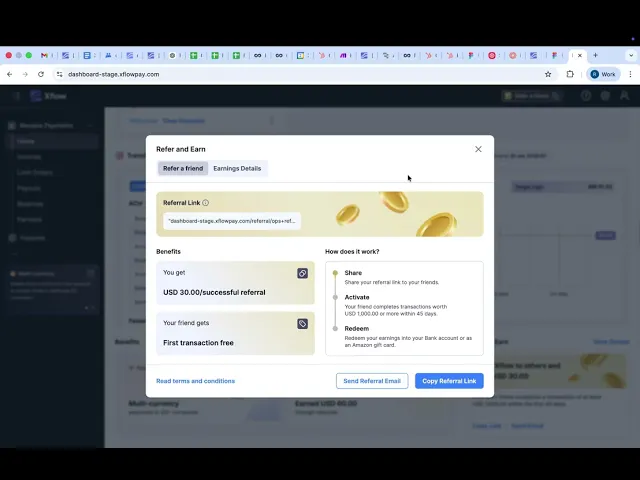
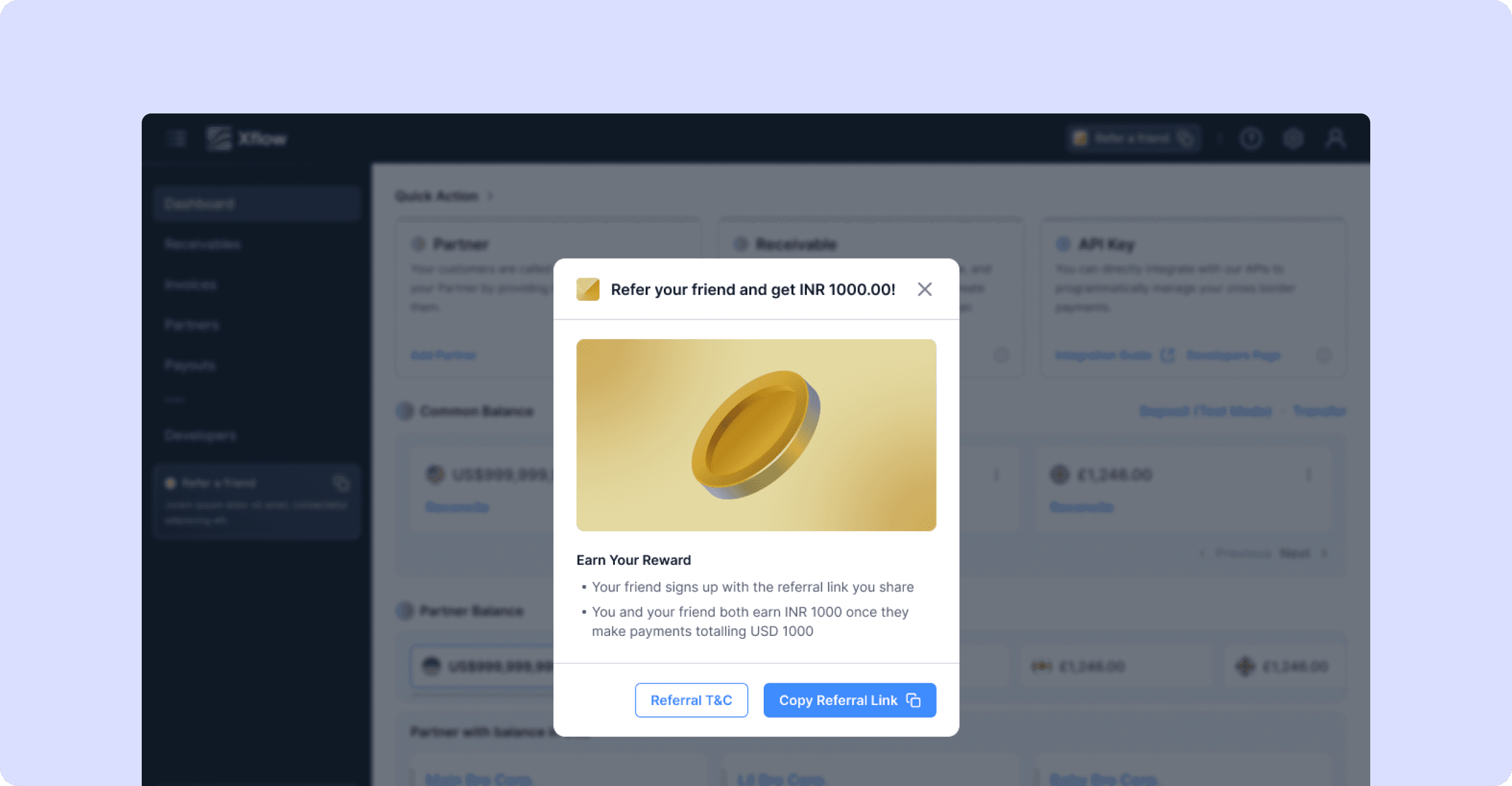
Xflow Referral Program

Xflow Referral Program

Xflow Referral Program

How I redesigned Xflow's referral program to project an 89% reduction in CAC, end-to-end in 1.5 weeks

How I redesigned Xflow's referral program to project an 89% reduction in CAC, end-to-end in 1.5 weeks

Project Overview

Project Overview

I designed a Referral Program to lower customer acquisition costs (CAC) by turning users into advocates. It focuses on clear incentives, eye-catching entry points, and real-time tracking to boost motivation and encourage sharing.

I designed a Referral Program to lower customer acquisition costs (CAC) by turning users into advocates. It focuses on clear incentives, eye-catching entry points, and real-time tracking to boost motivation and encourage sharing.

Team

Team

1 UX Designer

1 UX Designer

1 UX Mentor

1 UX Mentor

1 Product Manager

1 Product Manager

1 Visual Designer

1 Visual Designer

Duration

Duration

1.5 Weeks

1.5 Weeks

About Xflow

About Xflow

Xflow is a cross-border payments platform that enables B2B businesses, freelancers, IT service providers, goods exporters, and funded startups to seamlessly receive and manage international payments.

Xflow is a cross-border payments platform that enables B2B businesses, freelancers, IT service providers, goods exporters, and funded startups to seamlessly receive and manage international payments.

Context

Context

Freelancers and small businesses trust peer recommendations above most other signals, especially when it comes to financial tools like cross-border payment platforms. Xflow's existing users were already a credible, well-networked audience, making a referral program a natural growth lever.

Freelancers and small businesses trust peer recommendations above most other signals, especially when it comes to financial tools like cross-border payment platforms. Xflow's existing users were already a credible, well-networked audience, making a referral program a natural growth lever.

At the same time, the platform's Customer Acquisition (CAC) was climbing due to dependence on traditional marketing channels. A two-way referral program offered a way to bring it down, while bringing in users who convert better and stay longer than cold leads typically do.

At the same time, the platform's Customer Acquisition (CAC) was climbing due to dependence on traditional marketing channels. A two-way referral program offered a way to bring it down, while bringing in users who convert better and stay longer than cold leads typically do.

The Problems

The reward wasn't worth it

The old program offered a weak incentive. The team's working assumption was that users saw the reward, didn't feel it justified the effort of referring someone, and moved on.

The old program offered a weak incentive. The team's working assumption was that users saw the reward, didn't feel it justified the effort of referring someone, and moved on.

There was nothing to come back to

The old program had no tracking. Users couldn't see who they'd referred, which referrals were active or expired, or how much they'd earned. This wasn't a technical constraint - it was simply never prioritised.

That's a bigger problem than it sounds. Referral stats aren't just information - they're motivation. Seeing that you've already earned $60 through two referrals is the reason you refer a third. Without that feedback loop, the program had no way to build momentum. Users referred once, saw nothing, and never returned.

The old program had no tracking. Users couldn't see who they'd referred, which referrals were active or expired, or how much they'd earned. This wasn't a technical constraint - it was simply never prioritised.

That's a bigger problem than it sounds. Referral stats aren't just information - they're motivation. Seeing that you've already earned $60 through two referrals is the reason you refer a third. Without that feedback loop, the program had no way to build momentum. Users referred once, saw nothing, and never returned.

It wasn't built how Xflow users actually work

Xflow has two types of users within a single business: the owner, and employees who operate under that account. Both could refer Xflow to others — but the old program had no way to handle this. There was no concept of individual rewards. An employee who made a successful referral had no way to receive anything for it.

Xflow has two types of users within a single business: the owner, and employees who operate under that account. Both could refer Xflow to others — but the old program had no way to handle this. There was no concept of individual rewards. An employee who made a successful referral had no way to receive anything for it.

The Initial Referral Flow

The Initial Referral Flow

As a part of a new referral program, Product came up with a referral flow.

As a part of a new referral program, Product came up with a referral flow.

User refers Xflow to their friend

Via Referral Link or via email invite

Friend Signs Up On Xflow

Friend creates their Xflow account using your referral link.

Friend transacts worth USD 1,000 or more

Within 45 days of signing up.

Reward Earned

Friend gets that payout completely free and the user earns USD 30 as a reward.

Earnings gets processed

On the 28th of that mont straight to the user's Bank Account or as an Amazon Gift Card

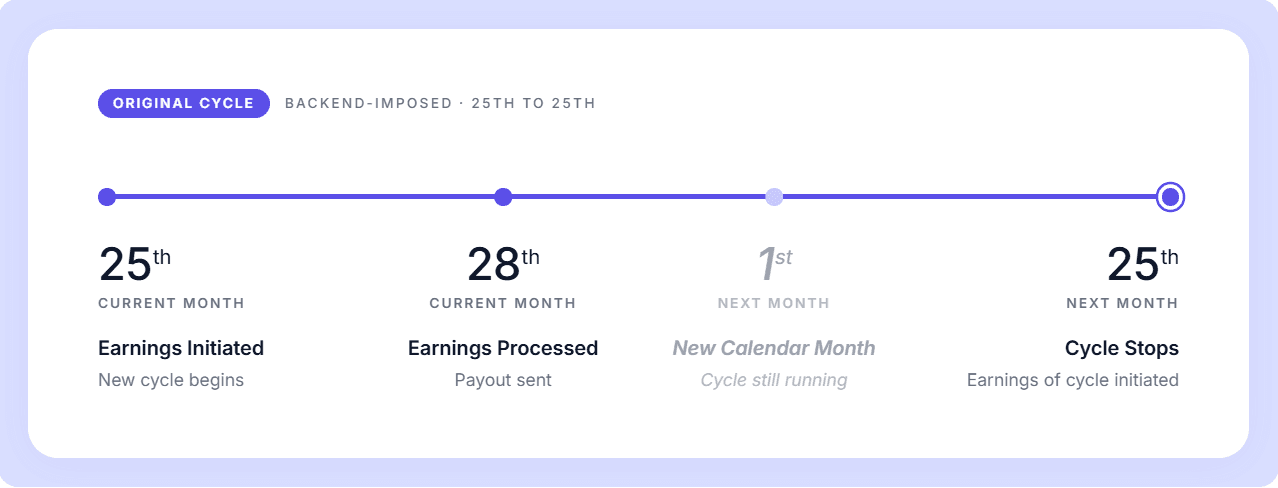
Earnings Cycle Constraint: A Backend-Driven 25th–25th Window

Earnings Cycle Constraint: A Backend-Driven 25th–25th Window

The referral earnings processing followed a rigid backend schedule — payouts were processed on the 28th, but required initiation by the 25th. This created a non-calendar earnings cycle where any earnings generated after the 25th were attributed to the following month rather than the current one.

The referral earnings processing followed a rigid backend schedule — payouts were processed on the 28th, but required initiation by the 25th. This created a non-calendar earnings cycle where any earnings generated after the 25th were attributed to the following month rather than the current one.

25th — Current Month
Earnings InitiatedNew Cycle Starts
28th — Current Month
Earnings Processed
1st — Next Month
New Calendar Month
25th — Next Month
Earnings of Cycle InitiatedCycle Stops

This was a backend-imposed constraint with no flexibility on the timeline. The wireframes were designed to work within this cycle, ensuring users could clearly understand when their earnings were counted and when payouts would be processed.

This was a backend-imposed constraint with no flexibility on the timeline. The wireframes were designed to work within this cycle, ensuring users could clearly understand when their earnings were counted and when payouts would be processed.

Research

Research

Industry Research

Industry Research

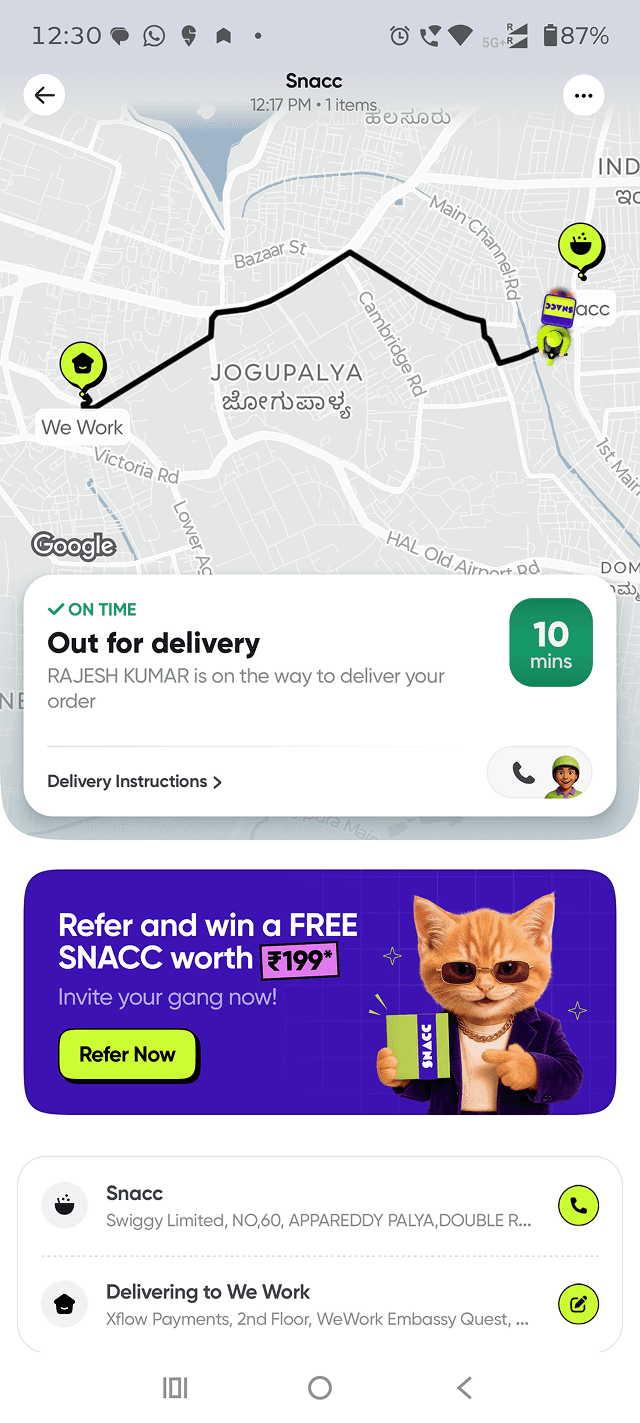
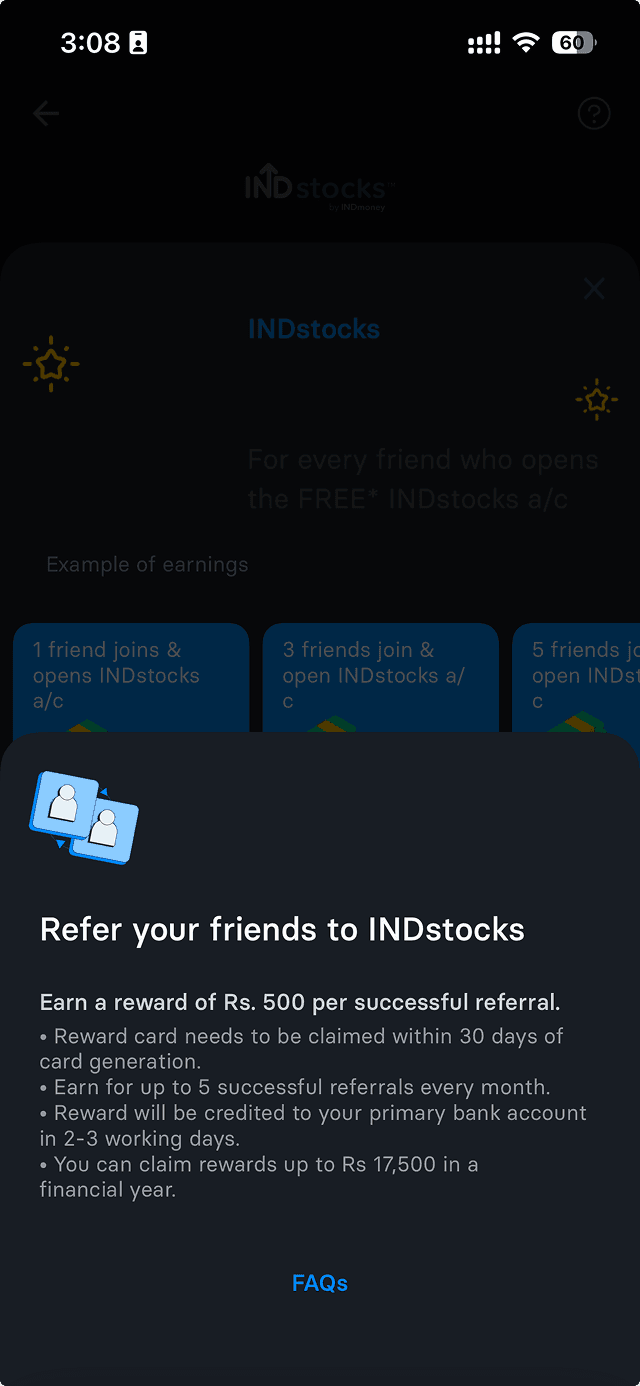
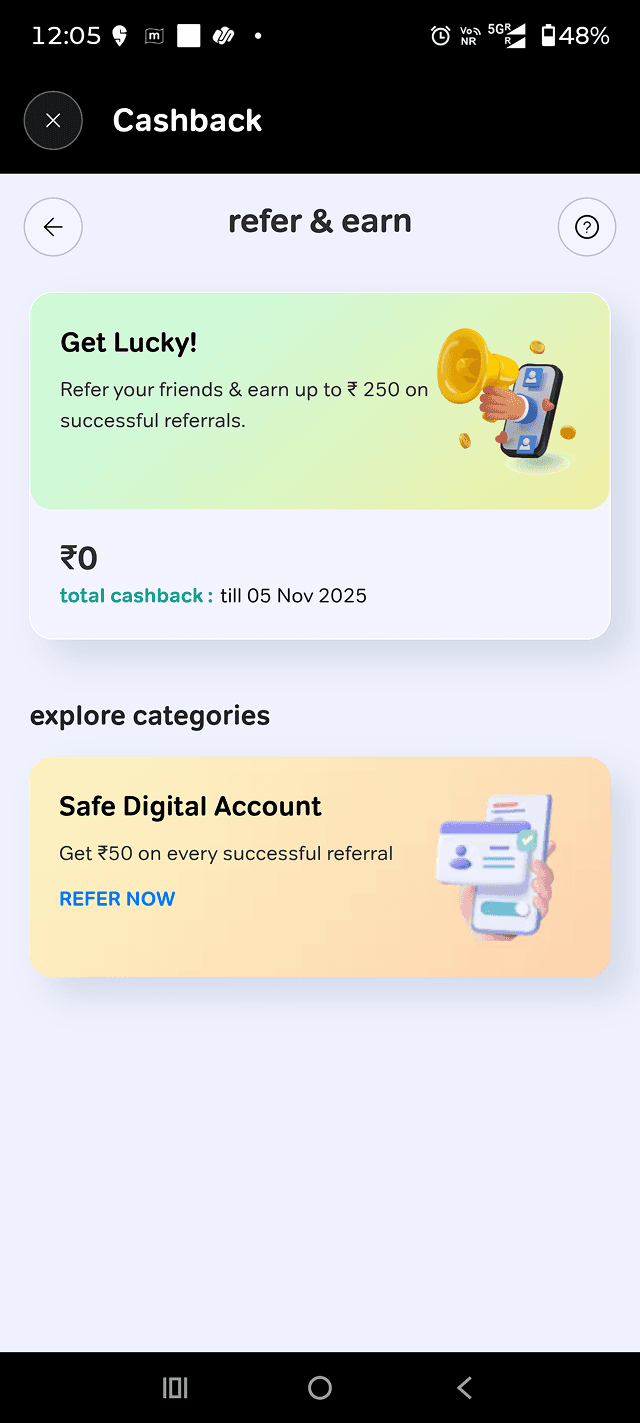
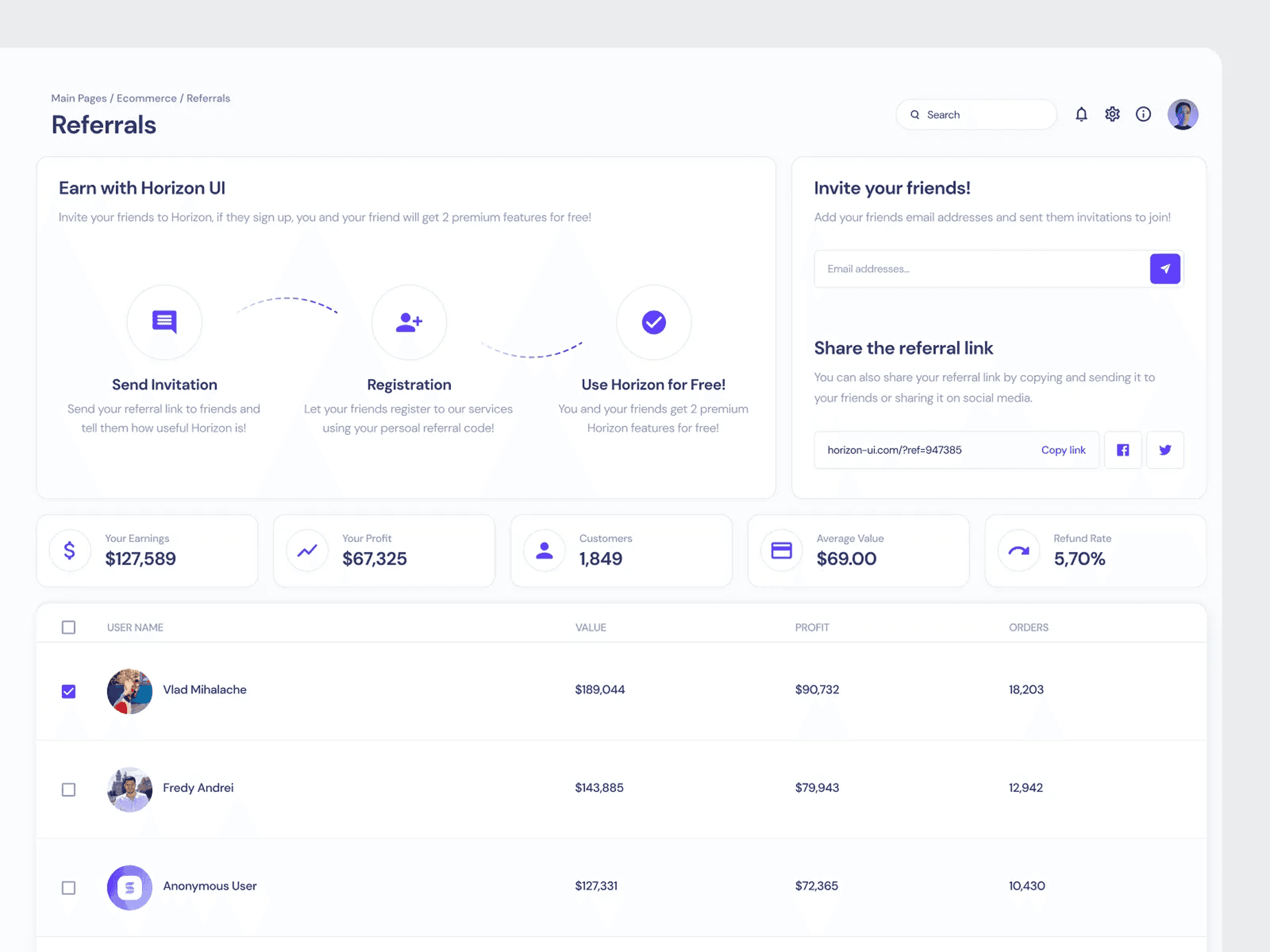
I researched how different platforms in the industry promote their referral program which could help me in designing the referral program wireframes.

I researched how different platforms in the industry promote their referral program which could help me in designing the referral program wireframes.

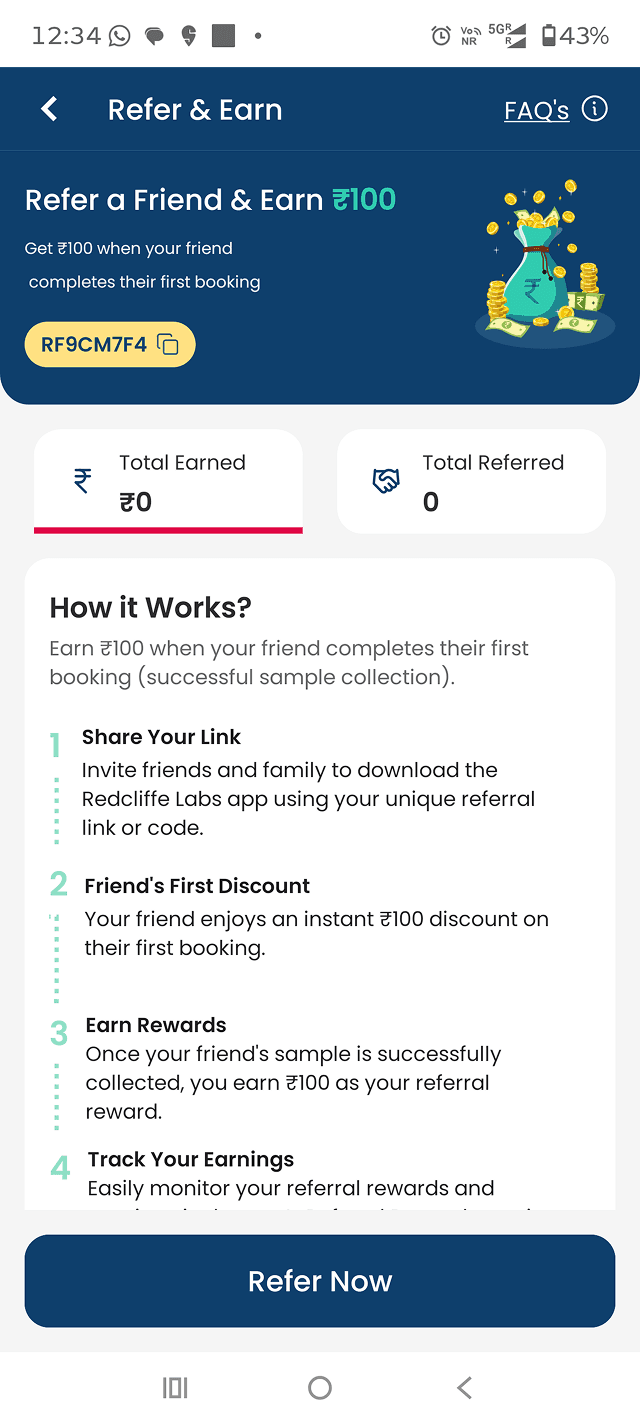
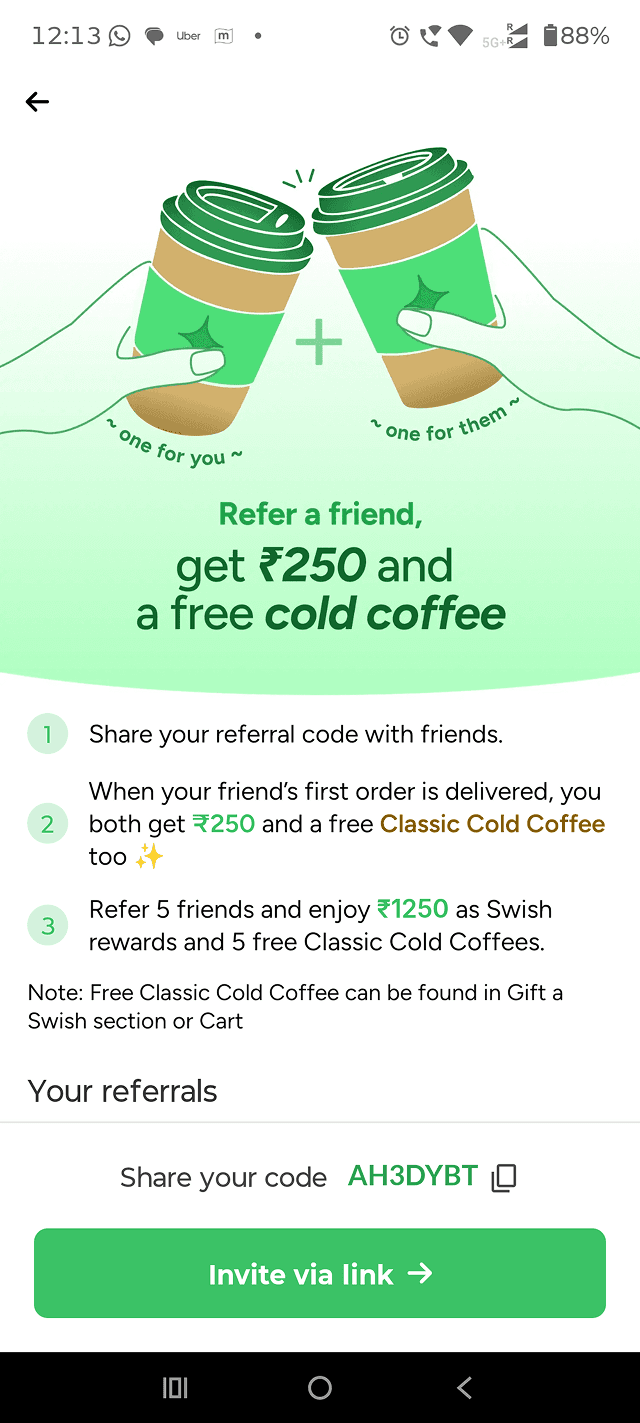
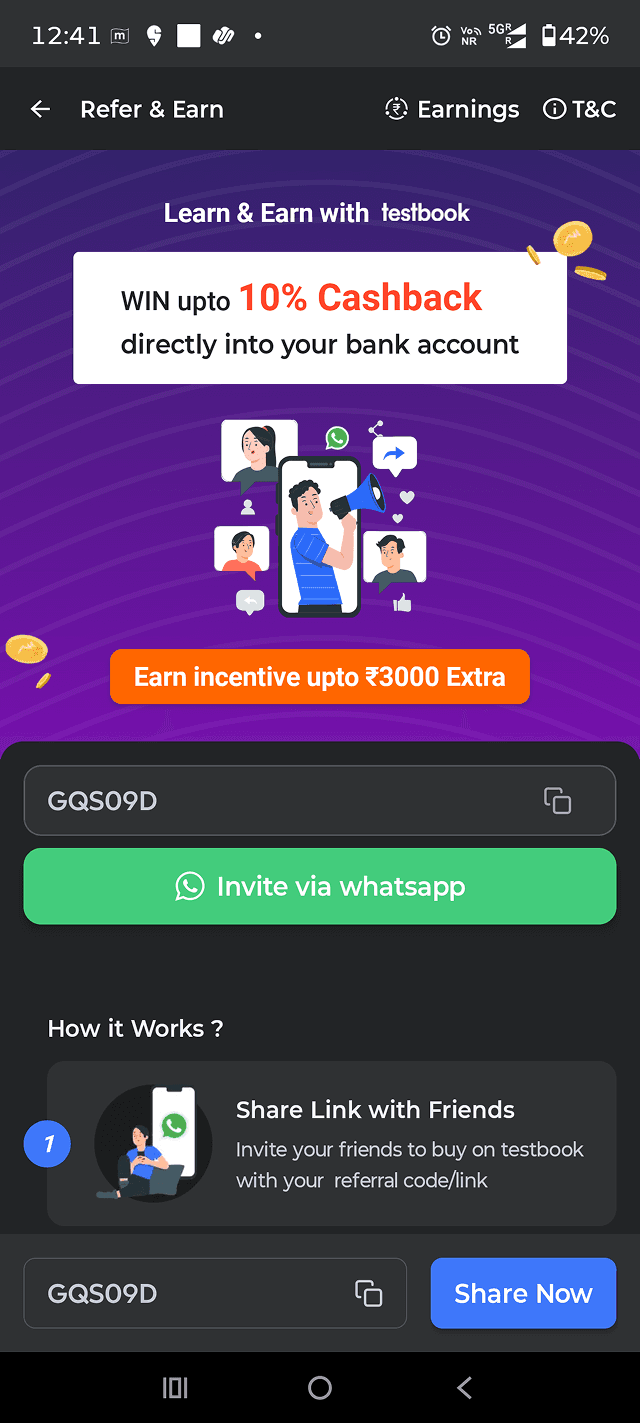
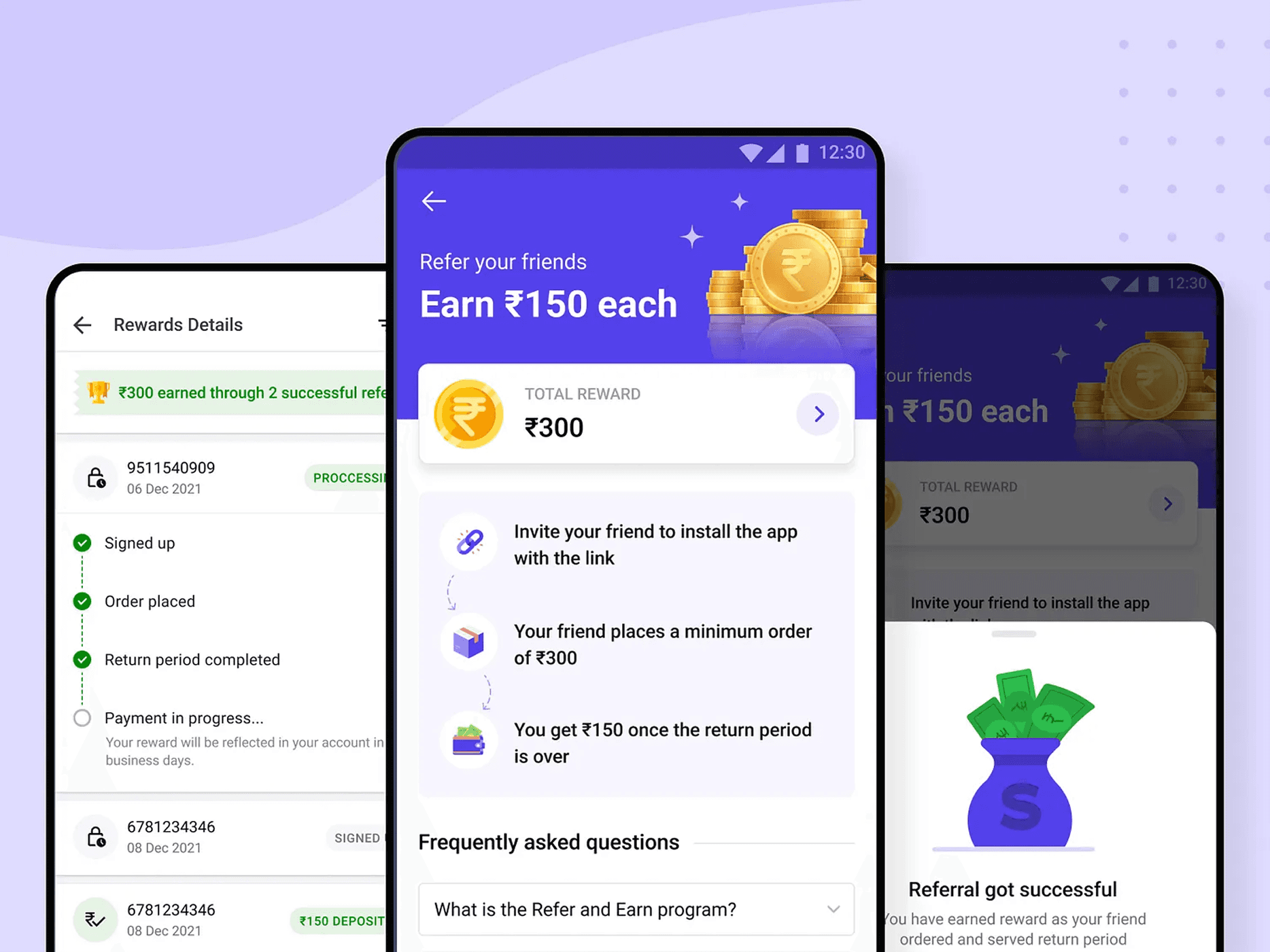
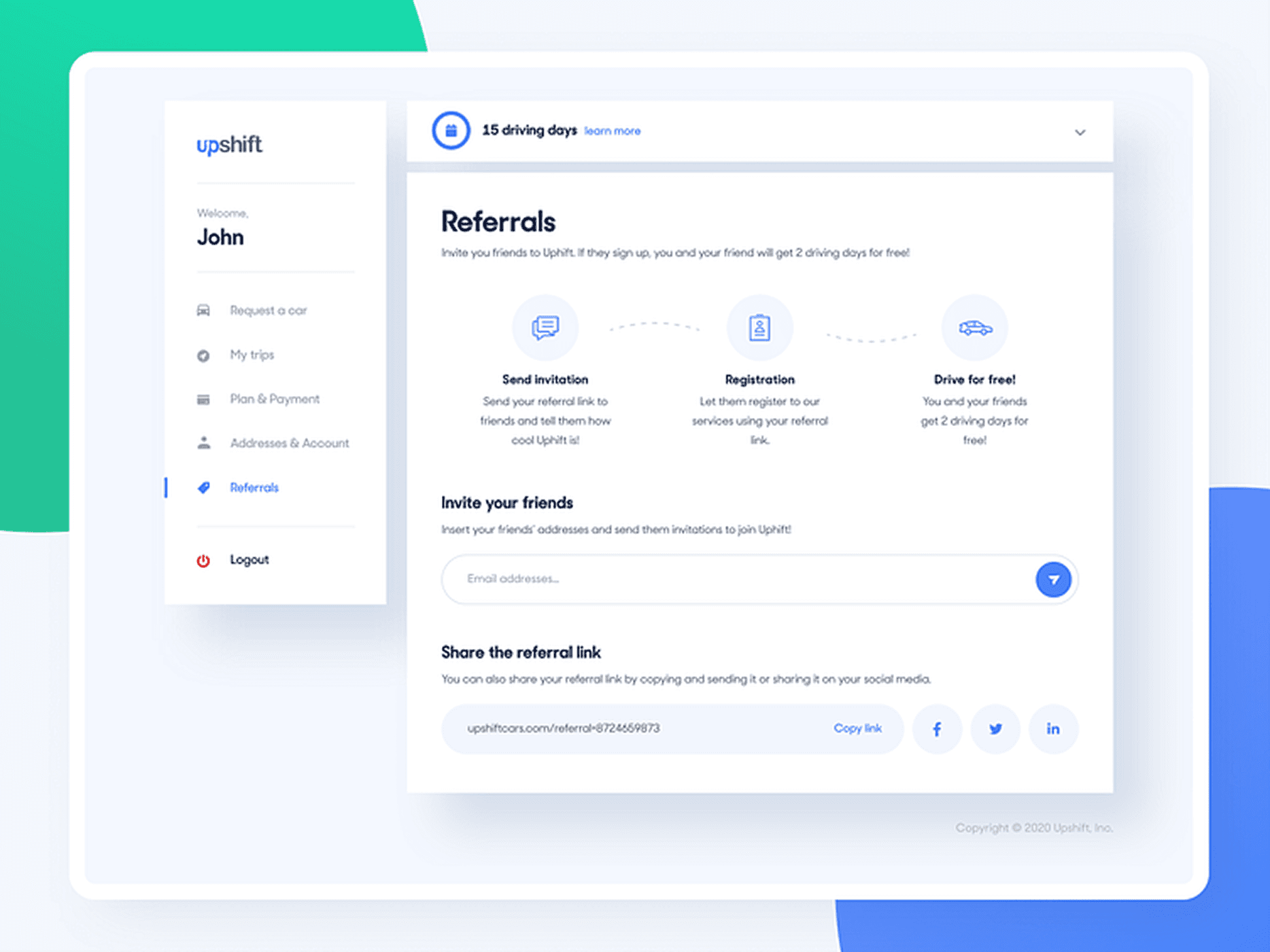
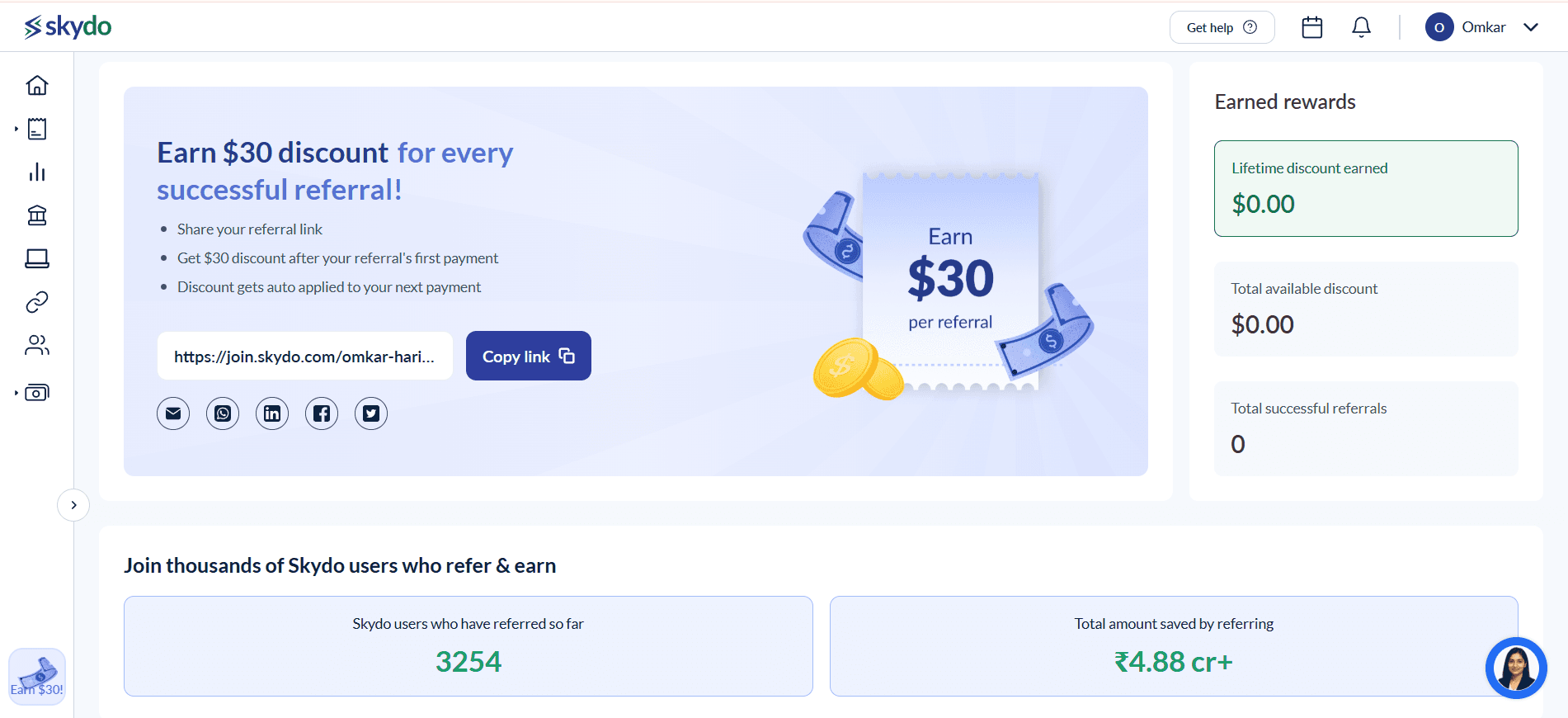
I reviewed 12 platforms, ranging from B2C products like INDmoney and Uber to B2B competitors including Skydo - a direct parallel to Xflow in the cross-border payments space. Three patterns stood out:

Key Takeaways

  1. Sell it, don't just show it: Every platform that drove high referral adoption used bold illustrations and prominently displayed the reward amount — large, impossible to miss. The referral section wasn't treated like a feature; it was treated like an ad. This was true even on platforms whose core product UI was minimal or utilitarian - including Skydo.

  2. Show "How it works": Every platform included a clear step-by-step section explaining how to earn. The copy was doing heavy lifting here - efficient enough that users wouldn't skip it, specific enough to remove doubt about when and how they'd get paid. The goal wasn't to be thorough, it was to be trusted quickly.

  3. Most Competitors just showed totals earnings: Across both B2C and B2B platforms, the pattern was the same: total earned, total successful referrals. A reasonable baseline — but it doesn't answer the questions users actually have. Who specifically referred someone? Which referrals are still active? Which ones expired before hitting the threshold?

User Stories

User Stories

After getting key takeaways and considering the referral flow I noted down the user stories for the referral program.

After getting key takeaways and considering the referral flow I noted down the user stories for the referral program.

Before Successful Referral

“How do I refer my friend?”

“How do I know my friend signed up?”

“How do I know that I’ve earned a reward?”

After Successful Referral

“How do I know which friends led me the rewards?”

“How do I know the Payment Method?”

“How do I change the Payment Method”

“How do I change the email id for Amazon Gift Card?”

“How do I know, when will my Payment will be Processed?”

“How do I know, if my rewards have initiated?”

“How do I know, if my rewards have processed?”

After Rewards are Processed

“How do I know how much I have earned in previous month?”

“How do I know which friends led me the rewards in previous month?”

“How do I know, through which method I got paid?”

Information Architecture

Refer a Friend

Referral Link

Email Input Field

How Referrals Work

Terms and Conditions

Earnings Details

Total Earnings

Processed Earnings

To-be Processed

Referral Metrics

Referrals Signed up

Referrals Earned

Referrals Expiring Soon

Referral Expired

Friends Details

Friends Nick Name

Friends Email

Signed up Date

Earned on Date

Status

Monthly Earnings Metrics

Month Cycle

Month Drop-down

Monthly Earning

Current Payment Method

Update Payment Method

Rewards Processing Date

Initiated Date

Processed Date

Wireframes
Referring a friend

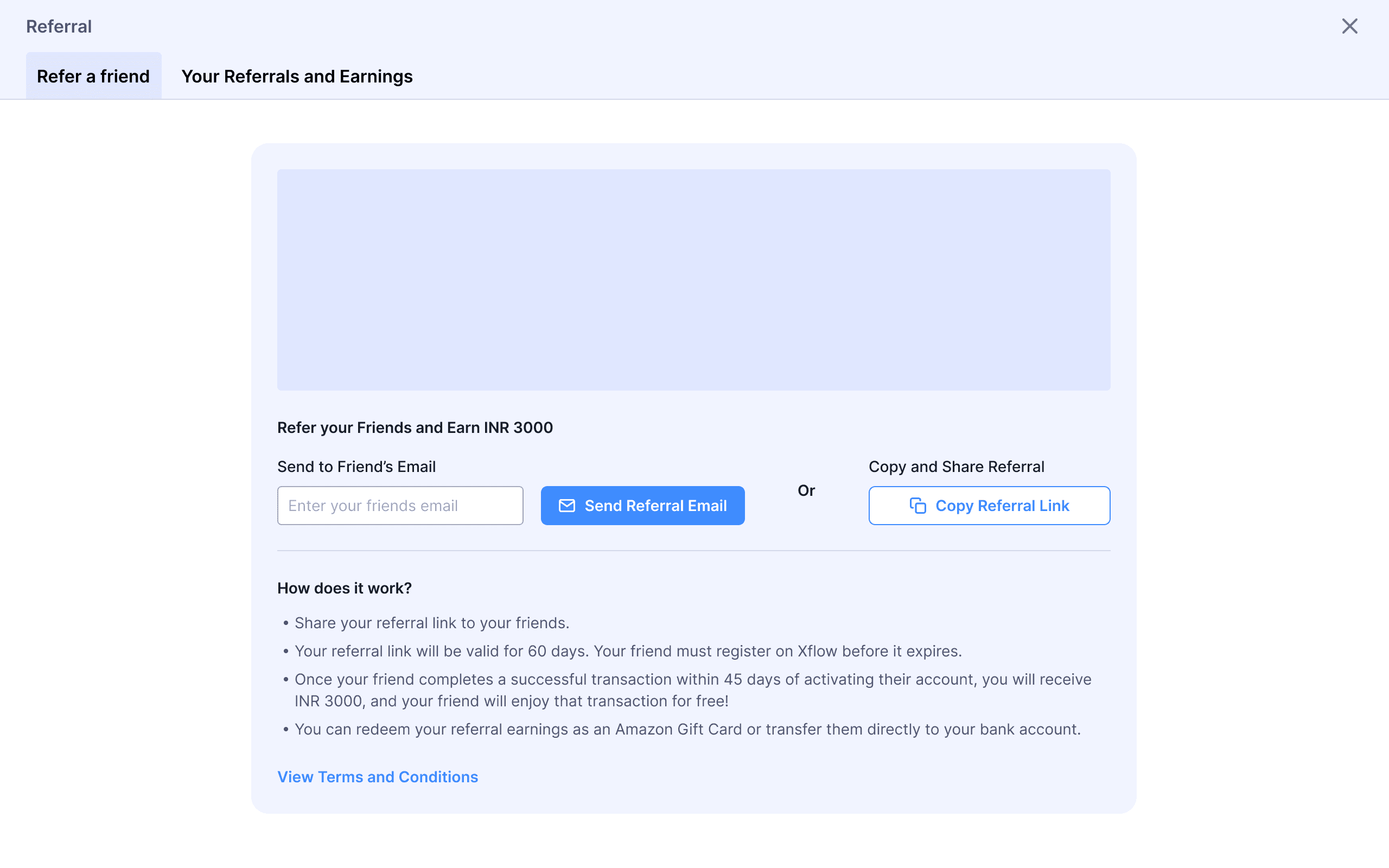
Referring a friend

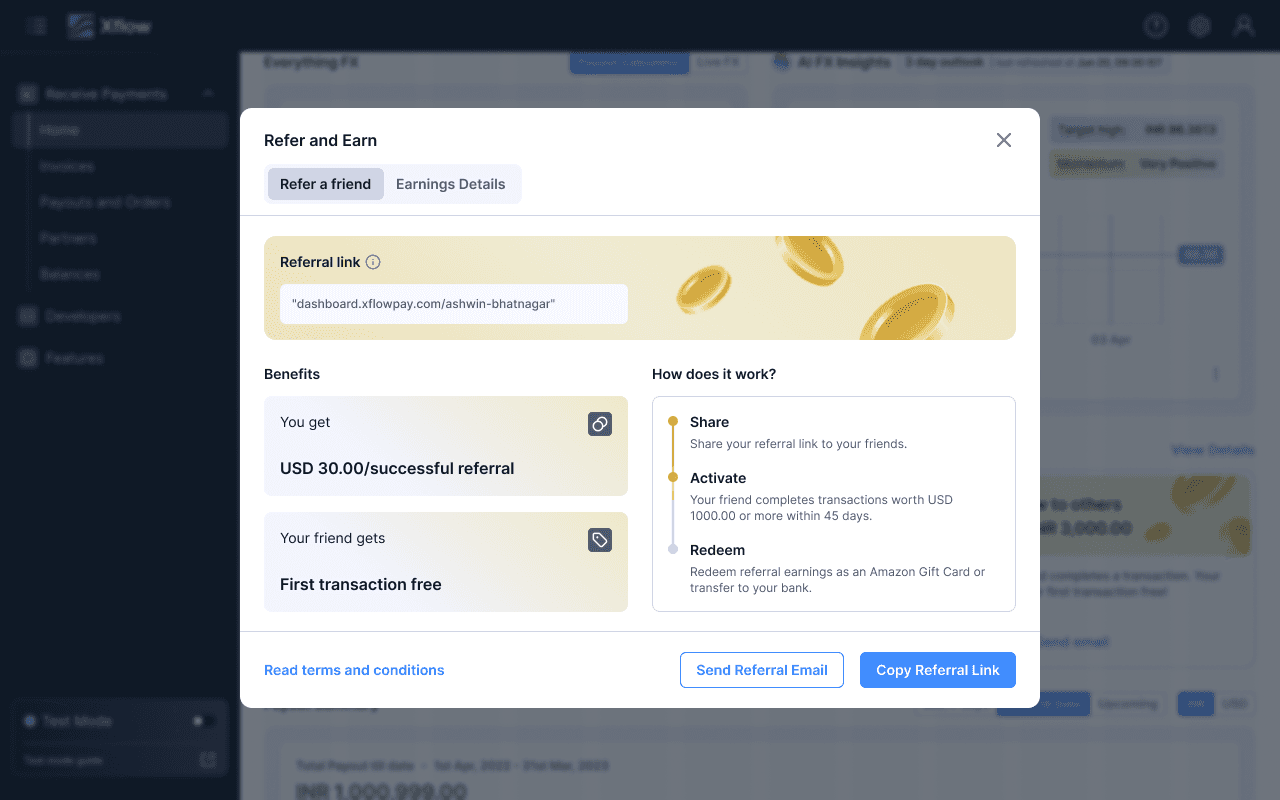
Users can refer a friend and discover how the referral process works. There's also a dedicated area for an illustration to encourage users to make referrals.

Referrals and Earnings Details

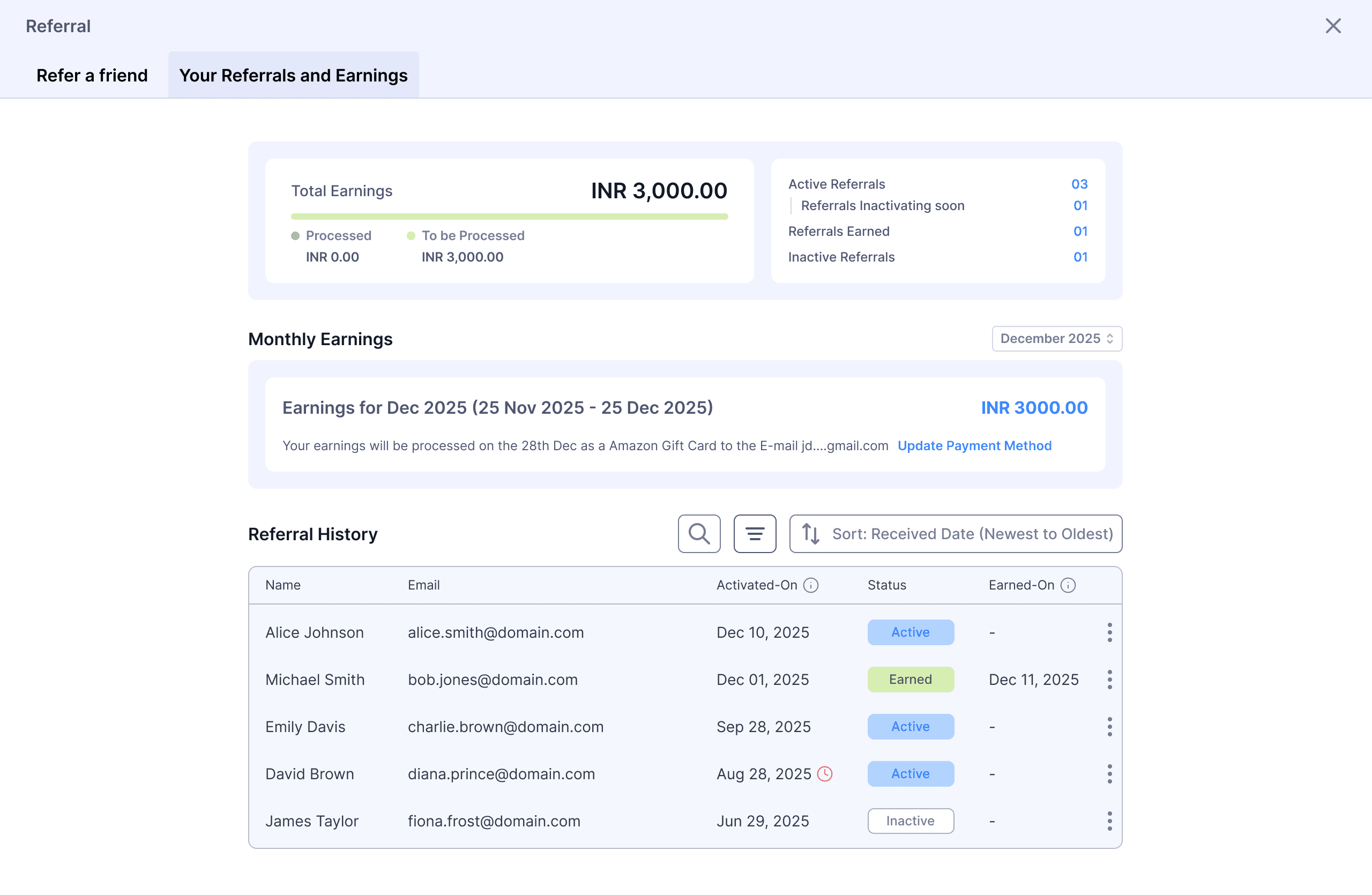
Referrals and Earnings Details

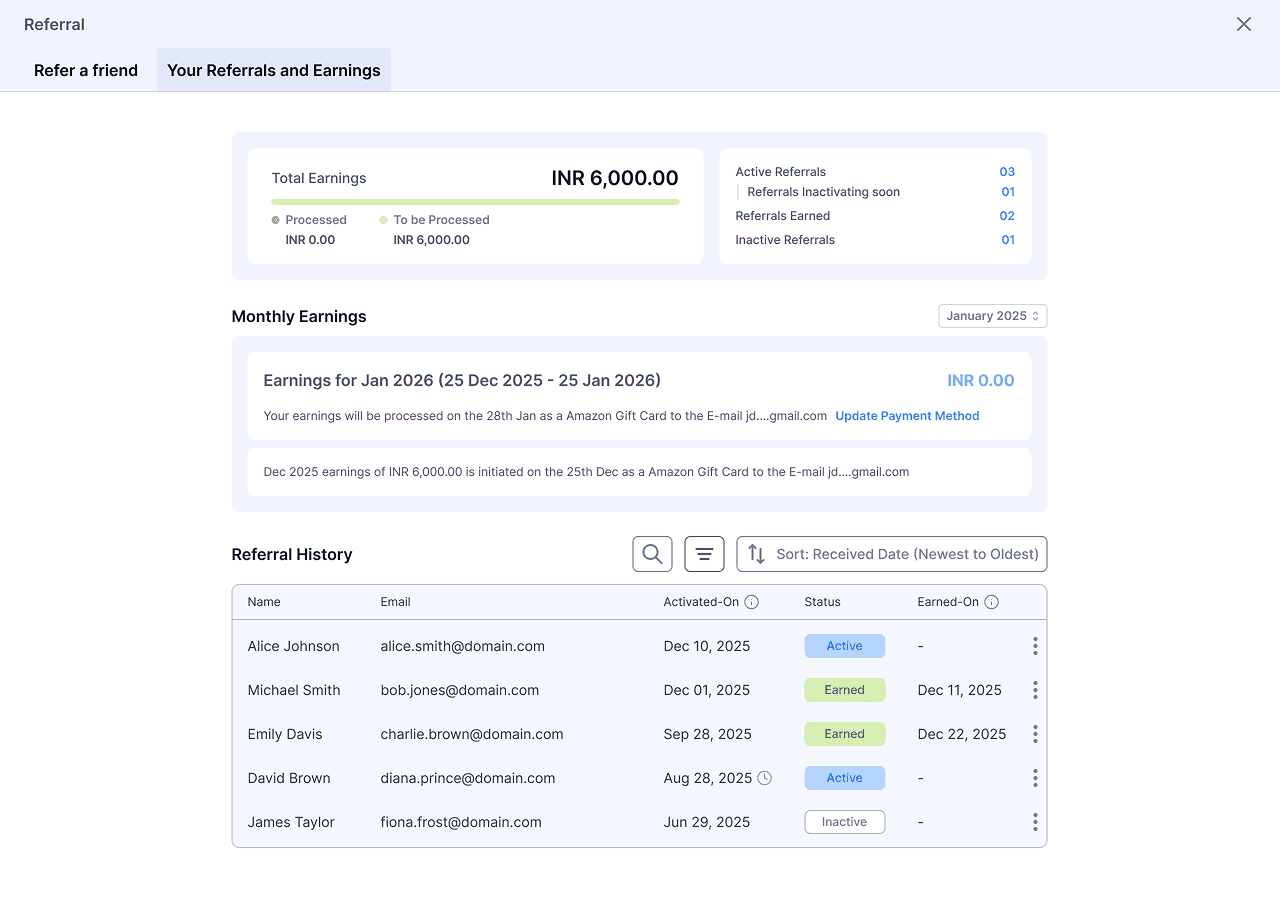
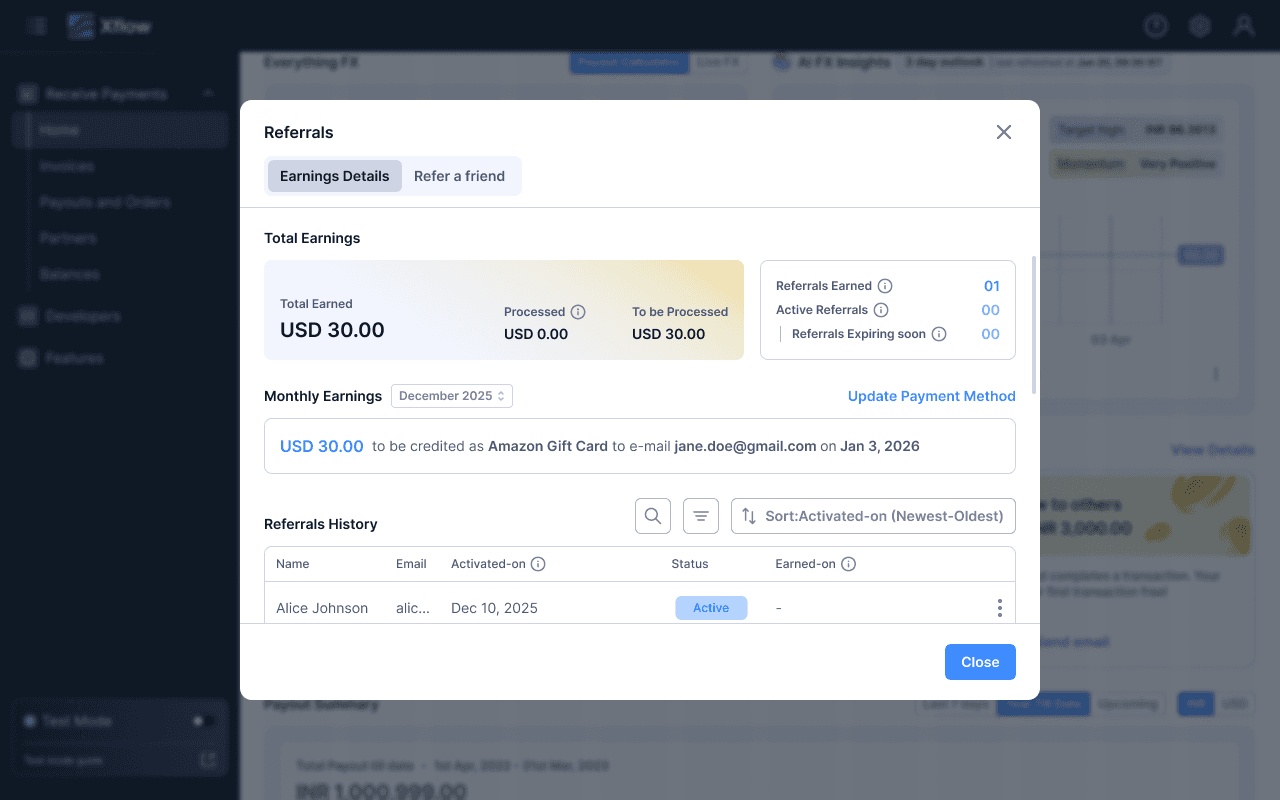
A dedicated tab for tracking referrals and earnings supports the transparency and scalability of the program. Users can view their current and past monthly earnings, along with their payment destinations.
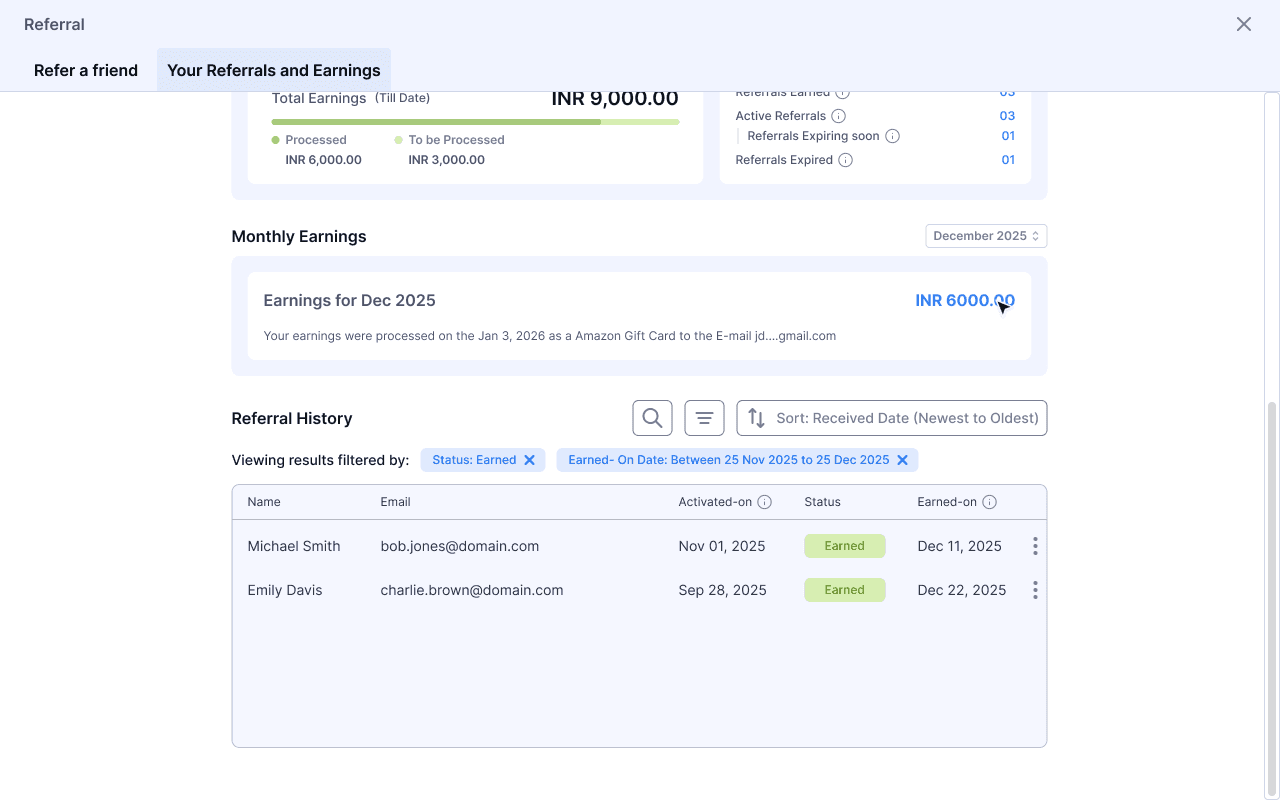
One-Click Multi-Filter: Connecting Earnings to Referrals

One-Click Multi-Filter: Connecting Earnings to Referrals

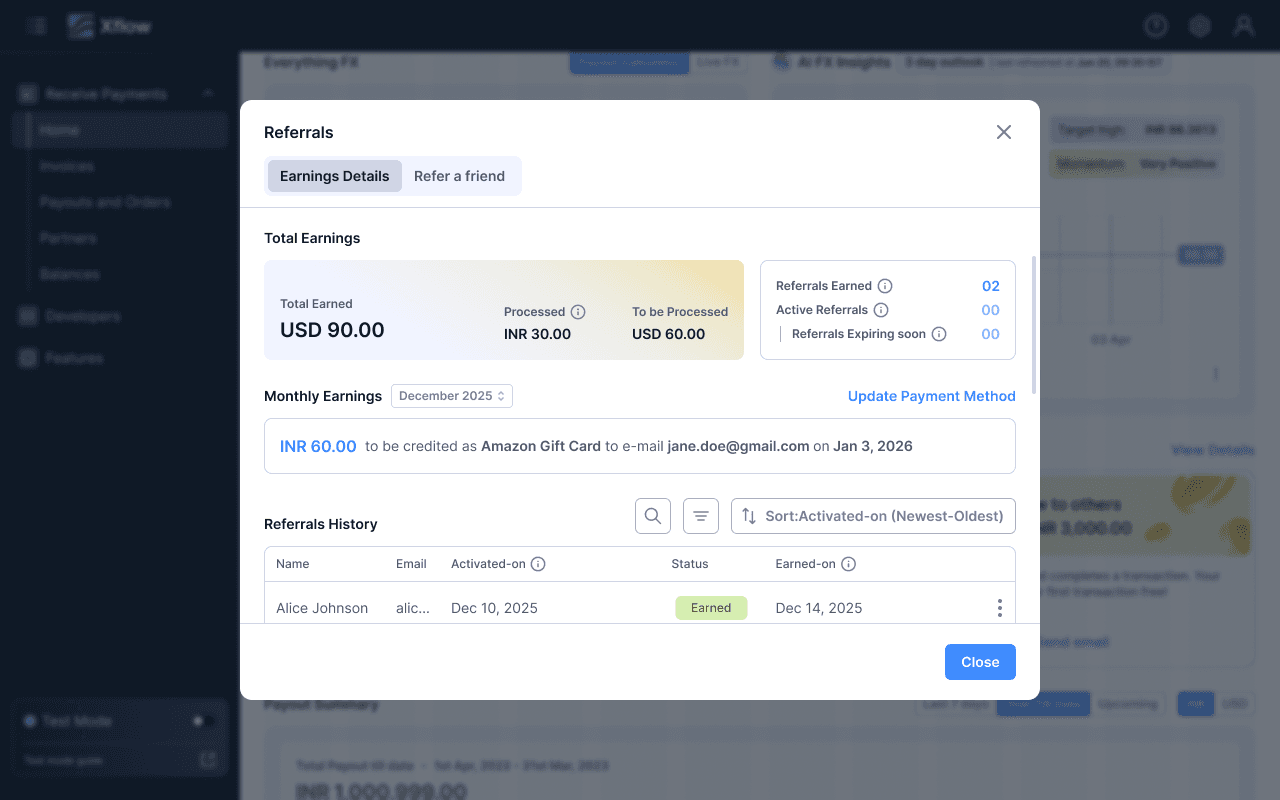
Since rewards accumulate month-wise, users needed a way to see which referrals drove their earnings in a given month - without manually configuring multiple filters. Clicking the earnings amount for any month simultaneously applies two filters to the referrals table: status set to "Earned" and date range set to that month's cycle. One tap, full context.

Choosing Earnings Processing Methods

Choosing Earnings Processing Methods

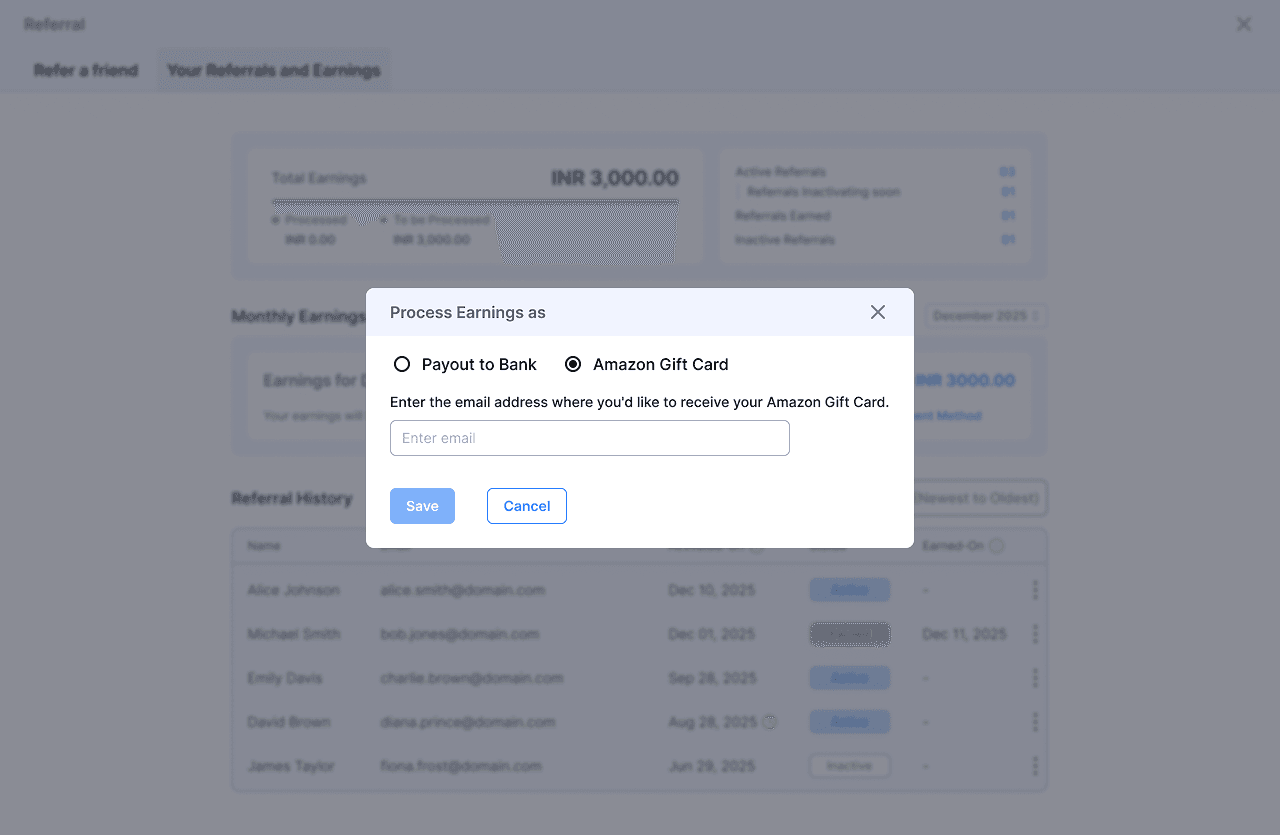
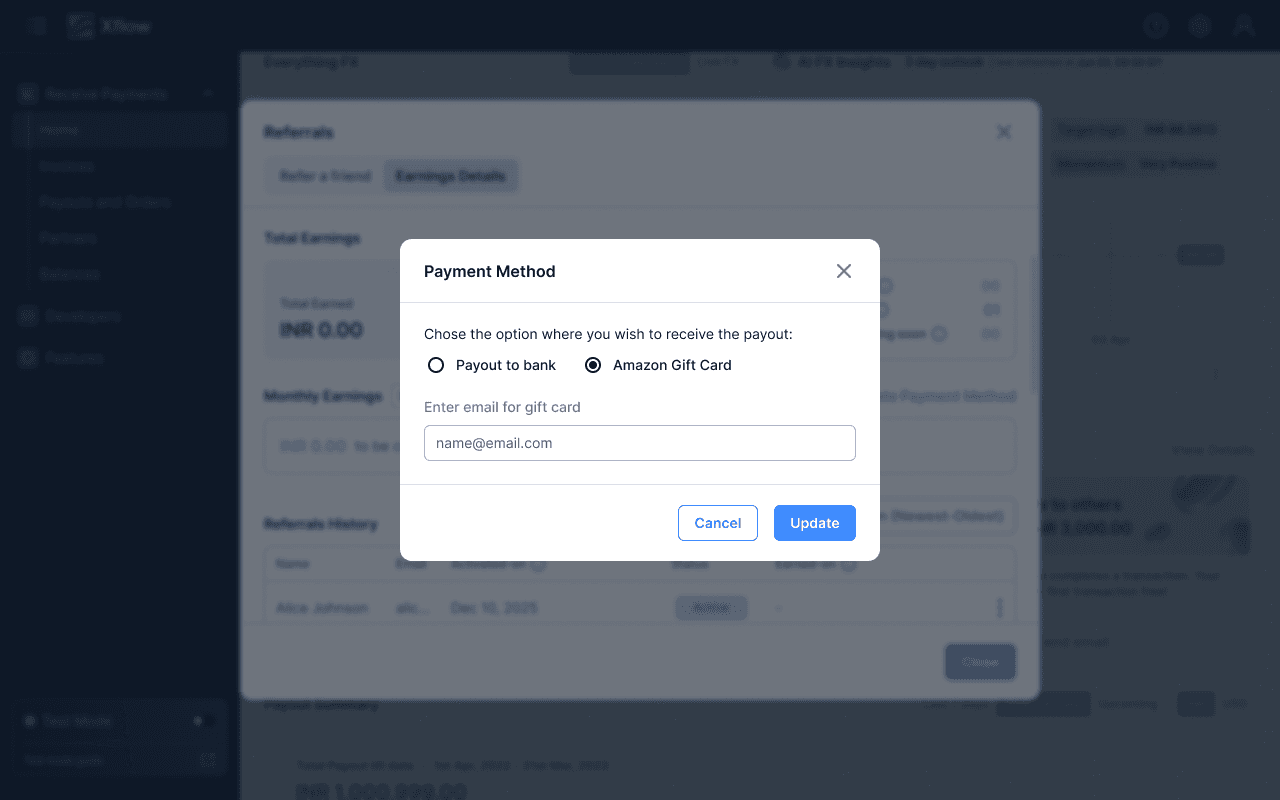
For Providing Referral Reward to the Individual Level of an Organization and to Organization, there are options of Pocessing via Direct Payout and via Amazon Gift Card.

Tracking Payment Status

Tracking Payment Status

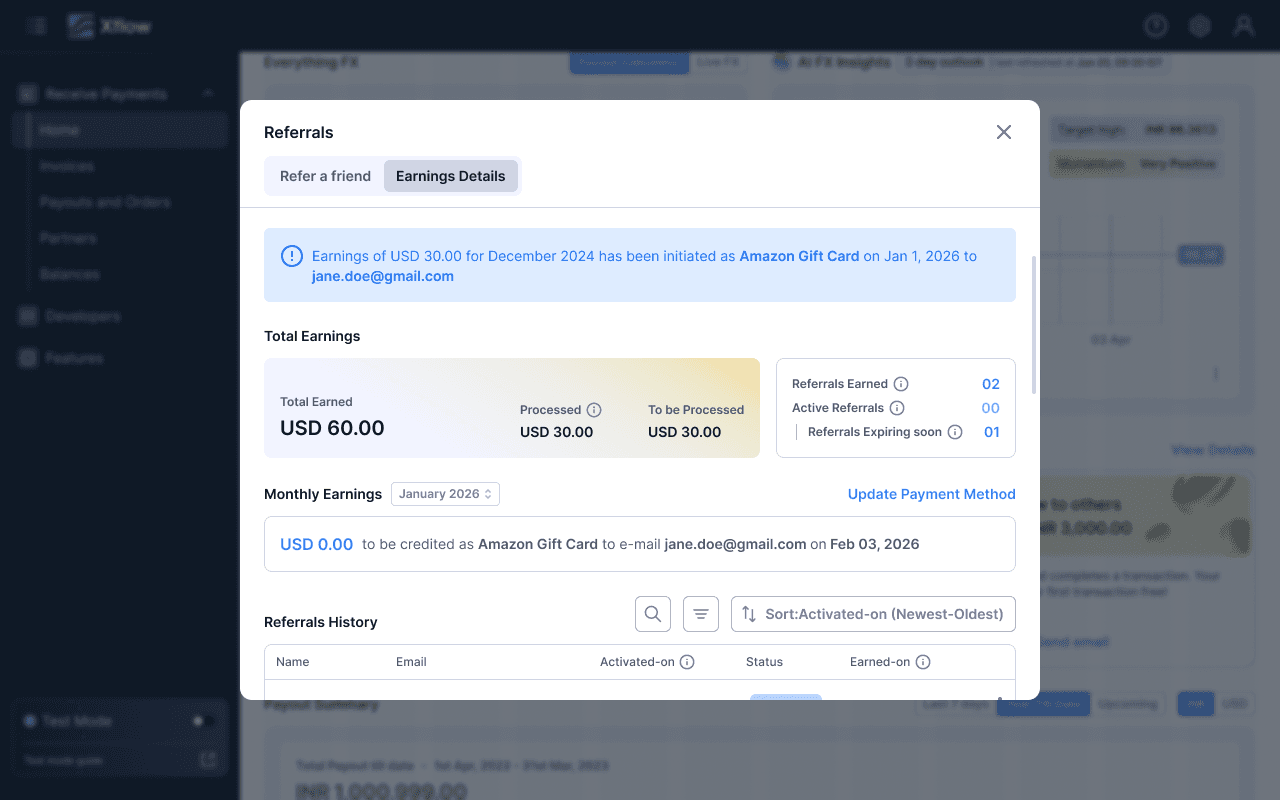
In the monthly earnings section, users can track the current status of the payment, supporting the transparency of the program.

Realigning the Cycle: Moving to a Calendar-Month Model

Realigning the Cycle: Moving to a Calendar-Month Model

While wireframing the monthly earnings screen, it became clear the 25th–25th cycle would create a disconnect for users. Month was changing in the product while the calendar month had not.

Wireframing the monthly earnings view exposed the confusion - users would see "March earnings" close on the 25th while their calendar still showed March. The design made the backend constraint visible as a UX problem.

Wireframing the monthly earnings view exposed the confusion - users would see "March earnings" close on the 25th while their calendar still showed March. The design made the backend constraint visible as a UX problem.

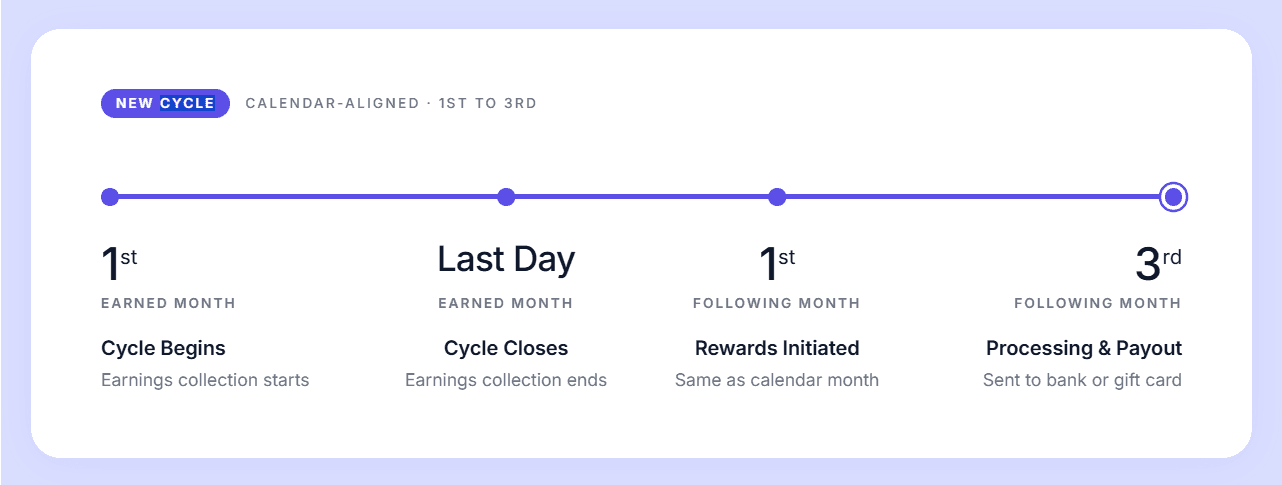
The outcome was realigning the cycle to match the standard calendar month — rewards initiation was moved to the 1st of the following month and processing to the 3rd, effectively eliminating the overlap and removing a key point of confusion for users.

The outcome was realigning the cycle to match the standard calendar month — rewards initiation was moved to the 1st of the following month and processing to the 3rd, effectively eliminating the overlap and removing a key point of confusion for users.

1st — Earned Month
Cycle BeginsEarnings Collection Starts
Last Day — Earned Month
Cycle ClosesEarnings Collection Ends
1st — Following Month
Rewards InitiatedSame as Calendar Month
3rd — Following Month
Processing & PayoutSent to Bank or Gift Card

From INR to USD: A Business-Driven Earnings Currency Change

From INR to USD: A Business-Driven Earnings Currency Change

The original design showed ₹3000 as the reward value. Mid-way through, the business team flagged a constraint - maintaining real-time INR valuations wasn't feasible. Reward shifted to $30 USD.

Business team raised the INR valuation tracking problem during review. Since Xflow is a cross-border payments product, a fixed INR value would fluctuate in real terms daily — making the reward misleading to users over time.

Business team raised the INR valuation tracking problem during review. Since Xflow is a cross-border payments product, a fixed INR value would fluctuate in real terms daily — making the reward misleading to users over time.

After aligning with the backend, product, and business teams, the decision was made to shift the reward value to USD, resolving the tracking complexity while keeping the reward structure intact.

After aligning with the backend, product, and business teams, the decision was made to shift the reward value to USD, resolving the tracking complexity while keeping the reward structure intact.

Impact

Impact

Reduction of CAC by 89%

This Referral Program is estimated to reduce the Customer Acquisition Cost by 89% by adding a channel of marketing by word of mouth among freelancers and small and medium businesses.

This Referral Program is estimated to reduce the Customer Acquisition Cost by 89% by adding a channel of marketing by word of mouth among freelancers and small and medium businesses.

Reflection

What I learned

There will be constraints for designs, but if the user experience is getting compromised, collaborate to find solutions.

There will be constraints for designs, but if the user experience is getting compromised, collaborate to find solutions.

A transparent user experience is unmatched, even if it requires to design additional screens and components.

A transparent user experience is unmatched, even if it requires to design additional screens and components.

Sometimes a business problem can be solved by a simple copy change in the designs.

Sometimes a business problem can be solved by a simple copy change in the designs.

Future Scope

Currently the monthly filter in the monthly earnings filter is limited to few months, with technical requirements met, the filter component will accommodate more filters

Currently the monthly filter in the monthly earnings filter is limited to few months, with technical requirements met, the filter component will accommodate more filters

Final Design

Final Design

Referring a friend

Referring a friend

Unlike the rest of the Xflow dashboard, this tab deliberately breaks the design language - a prominent illustration and reward amount upfront create a marketing surface within a B2B product. Users can share via a referral link or direct email invite. A "How it works" section below answers the two questions users actually have: what do I need to do, and when do I get paid.

Referrals and Earnings Details

Referrals and Earnings Details

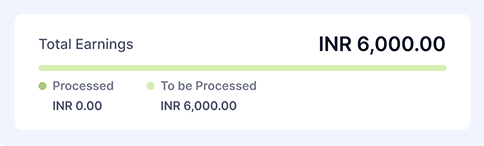
The feedback loop the old program never had. Every referred friend shows their current status - Active, Earned, or Expired - so there's no ambiguity about which referrals are still in play. Aggregate stats at the top double as motivation, and a month selector lets users drill into past earnings as the program matures. An empty state handles first-time visitors cleanly. All on the new calendar-month cycle.

Choosing Earnings Processing Methods

Choosing Earnings Processing Methods

Accessible via the "Update Payment Method" CTA, this modal lets each individual - owner or employee - choose between a direct bank payout or an Amazon Gift Card. The choice isn't locked in and can be updated before any cycle closes.

Tracking Payment Status

Tracking Payment Status

Two states — Earnings Initiated and Earnings Processed - make the backend payout process visible to users. Cycle dates are shown alongside each status so users always know which month they're looking at and when to expect their payout. Transparency as a feature, not an afterthought.

Referral Program Live

Referral Program Live

Impact

Projected 89% Reduction in CAC - via Referral Channel

Xflow already had a referral program. It just didn't work - low visibility, no tracking, no motivation to share. Users ignored it.


The PM modelled the cost-per-acquisition for this redesigned referral channel against Xflow's existing paid marketing CAC. The projected delta: 89% lower. That's not an aggregate improvement across all channels - it's a direct comparison of what paid acquisition costs versus what a referral-driven acquisition costs, using the $30 reward payout as the referral channel's cost basis.


The program shipped in March 2025. It's early - adoption is still building and the projection will be validated over the coming quarters. But the previous referral program existed and was ignored. This one is live, tracked, and designed to actually be used.

Full UX designed and handed off in 1.5 weeks, within a single sprint

entry points, earnings tracking, payment method selection, referral status visibility, and the full information architecture. Subsequent changes (rewards cycle realignment, INR→USD currency shift) were informed iterations on top of a foundation that held. The sprint delivered; the product absorbed what came after.

Reflection

What I learned

The rewards payment cycle was the most complex constraint on this project. Initiation on the 1st, processing on the 3rd, month-wise accumulation for tracking — all of it had to be understood, articulated clearly, and translated into a design that users could actually follow. The sprint didn't allow for slow comprehension. Getting comfortable with complexity quickly, and making it legible for users, was a core part of delivering this in 1.5 weeks.

The calendar-month pivot was the most important lesson from this project. When the 25th–25th cycle surfaced as a UX problem during wireframing, the initial instinct was to design around it — accept it as a backend constraint and find a way to make it less confusing. Instead, bringing it to the team changed the constraint itself. That shift — from designing within limitations to collaborating to remove them — is something I'll carry into every project going forward.

When the business team flagged the INR valuation problem, the fix was a copy change. Not a redesign. That only works if the underlying structure is solid. The fact that a business-level decision resolved to updating a number rather than rebuilding screens was a quiet validation of the IA decisions made early in the sprint.

Future Scope

Currently the monthly filter in the monthly earnings filter is limited to few months, with technical requirements met, the filter component will accommodate more filters

Let's Build Together!

Let's Build Together!

Connect with me

ohpatel11@gmail.com

Resume